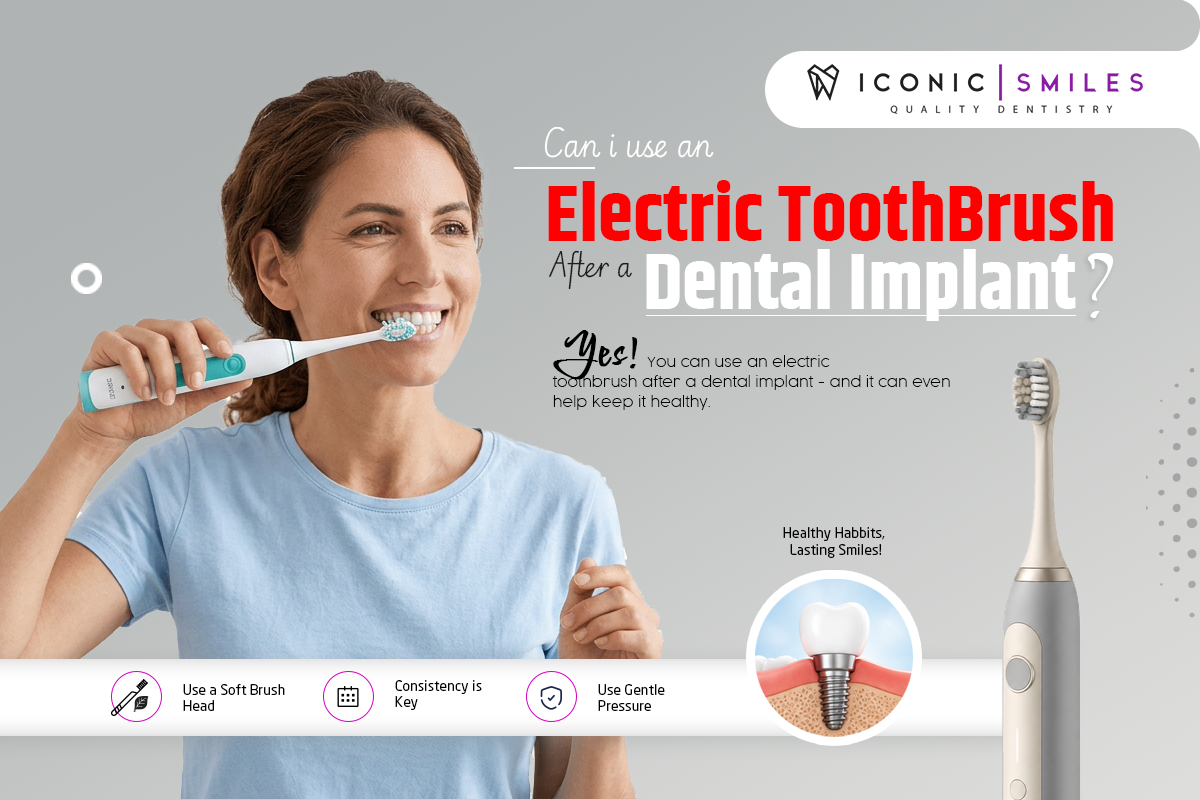
Yes. Once a dental implant has healed sufficiently, an electric toothbrush can be used safely around the implant restoration. The important issue is timing: a fresh surgical site should be treated differently from a healed implant.
Immediately after implant surgery, follow the cleaning instructions given by your implant dentist or surgeon. Depending on the procedure, you may be told not to brush directly over the surgical site for a period of time, or to clean very gently around it while using another method to control plaque. Do not run an electric toothbrush directly over a fresh implant wound until your clinician has advised that normal brushing can resume.
When can I use an electric toothbrush after implant surgery?
There is no single post-operative timetable that applies to every implant. The advice can differ depending on whether you have had a straightforward single implant, bone grafting, soft-tissue grafting, multiple implants or a full-arch procedure. Your own post-operative instructions therefore take priority over generic online advice.
Once the site has healed and your clinician is happy for you to brush the area normally, both electric and manual toothbrushes can be used around dental implants.
Can an electric toothbrush loosen a dental implant?
A normally functioning electric toothbrush should not loosen a well-integrated implant. A healed implant is anchored in bone through osseointegration. Day-to-day implant maintenance depends on effective plaque removal, and powered toothbrushes have been shown to be safe around implant-supported restorations.
If an implant or implant crown feels mobile, do not assume the toothbrush has caused it. The moving part may be the crown, screw or abutment rather than the implant fixture itself. Arrange an assessment rather than continuing to test it.
Electric or manual toothbrush: which is better for dental implants?
Both can work well. The NHS advises that manual and electric toothbrushes are both effective when all tooth surfaces are cleaned properly, and implant-specific studies have found that both approaches can maintain healthy peri-implant tissues. Some powered brushes can improve plaque removal or make effective brushing easier for patients who struggle with a manual brush.
The best toothbrush is therefore the one that allows you to clean the implant restoration thoroughly, gently and consistently. For some patients that is an electric brush; for others, a manual brush is perfectly adequate.
Why cleaning around implants matters
Dental implant crowns cannot develop tooth decay, but the gum and supporting bone around an implant can develop plaque-related inflammation. Peri-implant mucositis affects the soft tissues. If disease progresses and supporting bone is lost, this is called peri-implantitis.
Effective daily plaque control and regular implant maintenance reduce the risk of peri-implant disease. The toothbrush is only one part of that routine because many implant surfaces are difficult to reach from the outside alone.
How to brush around a healed dental implant
- Brush twice a day for around two minutes, including the implant restoration and the rest of your teeth.
- Use a soft or suitable manufacturer-recommended brush head and avoid aggressive scrubbing.
- Place the bristles carefully along the area where the implant crown or bridge meets the gum and guide the brush slowly so that all accessible surfaces are cleaned.
- If you use an oscillating-rotating brush, allow the head to work on each area rather than using a vigorous manual scrubbing motion. If you use a sonic brush, follow the manufacturer’s technique and your hygienist’s advice.
- Clean between teeth and around the implant every day using the interdental aid recommended for your restoration.
What should I use to clean between dental implants?
This is often more important than choosing between manual and electric toothbrushing. The correct tool depends on the shape of the restoration, the gum contour and the space available for cleaning.
Interdental brushes can be very effective when the correct size can pass through without trauma or rubbing exposed implant surfaces.
Dental floss or implant floss may be suitable around some single crowns or bridges.
Single-tufted brushes can help around difficult crown or bridge margins.
Water flossers can be useful for selected patients and restorations, but they should be considered part of a personalised cleaning plan rather than a universal replacement for other interdental cleaning.
Patients with implant bridges or full-arch restorations usually need more specific instruction than patients with a single implant crown.
What toothpaste should I use with dental implants?
There is no need to buy toothpaste marketed specifically for implants. If you have natural teeth, continue to use a fluoride toothpaste to protect them from decay. Avoid unusually abrasive products and use the toothpaste and cleaning products recommended for your individual mouth and restoration.
What features are useful in an electric toothbrush for implants?
A small, soft or appropriate brush head that allows access around the implant crown or bridge.
A two-minute timer to support consistent brushing time.
A pressure sensor if you tend to brush too hard.
A handle and head that you can control comfortably, particularly if hand dexterity is limited.
Expensive app connectivity and multiple cleaning modes are optional. They are not a clinical requirement for implant maintenance.
What should I avoid after implant surgery?
Do not scrub a fresh surgical site, force an interdental brush under healing tissue, or assume that the same routine applies immediately after every implant procedure. Follow your implant team’s instructions on brushing, mouthwash and interdental cleaning until the area has healed.
How Iconic Smiles looks after dental implants long term
At Iconic Smiles, implant maintenance is planned around the restoration you actually have. A single implant crown, an implant bridge and a full-arch restoration create different cleaning challenges. We show patients which toothbrush and interdental aids reach the relevant margins safely, then review plaque control, gum health, bleeding, probing measurements, restoration cleansability and supporting bone where indicated.
If you have recently had an implant and are unsure when to restart normal brushing, or you already have implants and want a maintenance review, contact Iconic Smiles. We provide implant treatment and long-term implant care across Hertfordshire and North London.
Frequently asked questions
Can I use an Oral-B or Sonicare toothbrush on dental implants?
Yes, once the implant site has healed sufficiently and your clinician has advised normal brushing. Both oscillating-rotating and sonic powered brushes can be used around implant restorations.
How often should I brush a dental implant?
Brush twice daily and clean the relevant interdental or under-bridge areas every day using the method recommended for your restoration.
Do implants need special floss?
Not always. Some implants are best cleaned with interdental brushes, some with floss or implant floss, and some need a combination. The restoration design and tissue contour determine the best approach.
What happens if I brush a new implant too early?
Direct or vigorous brushing over a fresh surgical site can irritate healing tissue. Follow the post-operative instructions from the clinician who performed the surgery and ask if you are unsure when to resume powered brushing.