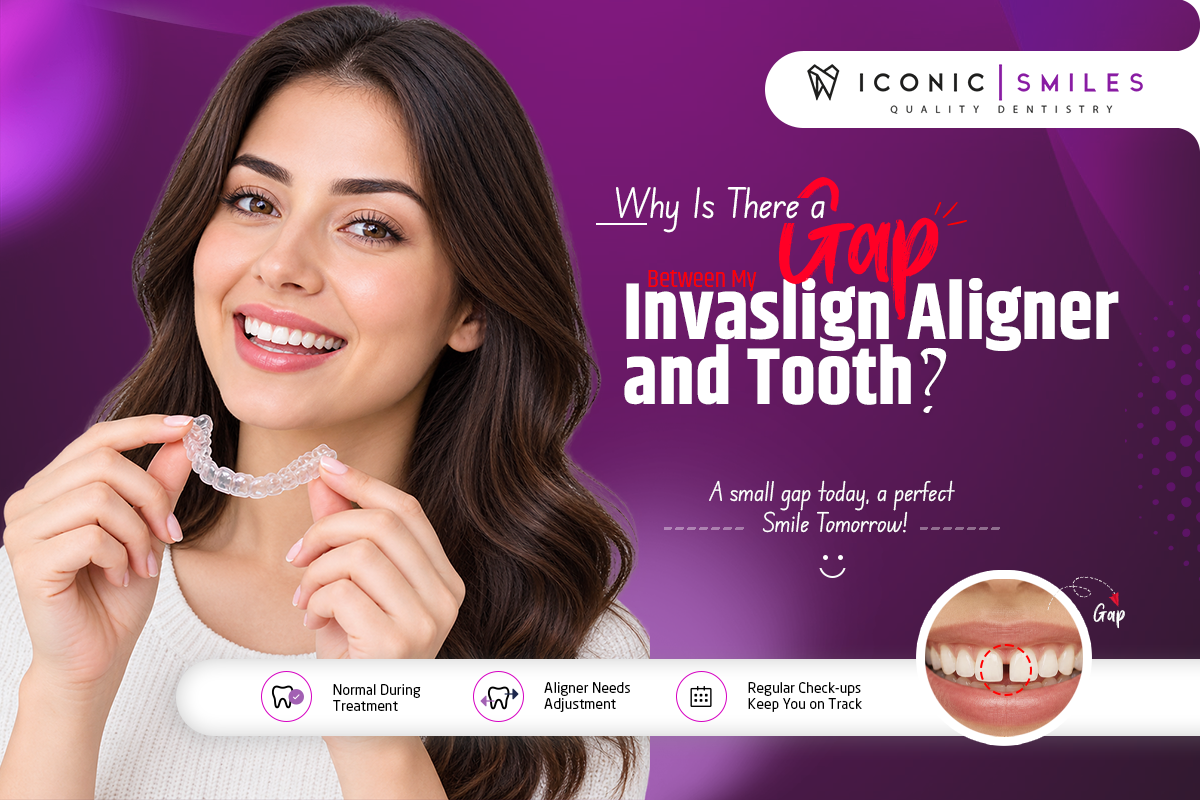
A visible gap between a tooth and an Invisalign aligner can mean that the tray is not fully seating over that tooth, sometimes described as the aligner not tracking. A small gap when a new aligner is first fitted is not always a problem, but a persistent or increasing gap should be checked rather than ignored.
Tracking simply describes how closely your actual tooth position is following the planned tooth movement. Good tracking means the aligner is seating closely over the teeth and engaging the attachments as intended. If a tooth is not moving as planned, the aligner may begin to lift away from it.
How Do I Know If My Invisalign Aligner Fits Properly?
- Your aligner should generally feel snug and seat fully over the teeth. A new tray may feel tight initially, but it should still fit over the teeth rather than visibly sitting away from them.
- There should not be a persistent or increasing space between the biting edge of a tooth and the corresponding part of the aligner.
- The tray should also engage any attachments properly and should not feel obviously distorted, loose or unable to seat.
- Some aligners have different trim-line designs, so the amount of gum coverage itself is not a reliable way of judging whether an aligner is tracking correctly.
What Causes a Gap Between a Tooth and Invisalign Tray?
-
Not wearing the aligners for long enough
Insufficient wear is one of the common reasons teeth can fall behind the planned movement. Invisalign commonly recommends around 20–22 hours per day, but you should follow the exact wear instructions given by your dentist or orthodontic clinician.
-
The aligner is not fully seated
Sometimes the tooth is moving correctly but the tray has simply not been seated fully, particularly when a new aligner is first inserted.
-
A damaged or distorted aligner
Very hot water, heat exposure or accidental distortion can alter the shape of an aligner and prevent it fitting properly. If a tray looks warped or damaged, contact your dental team rather than trying to reshape it yourself.
-
A lost or damaged attachment
Attachments are small areas of composite placed on selected teeth to help the aligner control certain movements. If one comes off, it may affect how the aligner engages that tooth. The effect depends on the movement being attempted, so it should be assessed rather than assuming treatment has failed.
-
A change in the shape of the tooth
A new filling, crown, fracture, lost restoration or other change in tooth shape can alter the way an existing aligner fits.
-
Plaque, calculus or debris
Heavy deposits or debris can occasionally interfere with seating. Keeping the teeth and aligners clean is important for both fit and oral health.
-
The tooth has not moved as predicted
Clear aligner treatment is carefully planned, but biological tooth movement is not perfectly predictable. Some movements are more difficult than others and may require additional time, attachment changes, a rescan or refinement aligners.
Can Chewies Fix an Invisalign Gap?
Chewies or other seating aids can sometimes help an aligner seat more fully, particularly when a new tray is not quite engaging. They do not correct every tracking problem. If the underlying issue is a lost attachment, distorted tray or tooth movement that has fallen significantly behind the plan, simply biting on a chewie will not solve it.
Use them only as advised by your dental team.
Should I Keep Wearing the Aligner If There Is a Gap?
In most situations, continue wearing your current aligner until you have spoken to your dental team, unless they have specifically advised otherwise. Do not force an aligner that clearly will not seat, and do not independently jump backwards or forwards between trays.
Contact your Invisalign provider if the gap is increasing, the tray will not seat, an attachment has come off, the aligner appears damaged, or you have sharp, severe or persistent pain rather than the expected pressure associated with tooth movement.
Should I Move to the Next Aligner?
If your current aligner is not seating as expected or a gap is getting worse, contact your clinician before progressing. Each aligner is designed around the position the teeth are expected to have reached at that stage. Moving on too early can sometimes make subsequent trays fit less accurately.
Your clinician may recommend staying in the current tray longer, returning to a previous stage, replacing an attachment, making a small treatment adjustment or rescanning for refinement aligners. The correct decision depends on why the gap has developed.
How Can I Reduce the Risk of Tracking Problems?
- Wear your aligners for the prescribed number of hours each day.
- Seat each new aligner carefully and use seating aids if advised.
- Do not expose aligners to hot water or other sources of heat.
- Keep the teeth and trays clean.
- Take care when removing aligners around attachments.
- Attend your planned reviews so tracking can be checked before a small discrepancy becomes a larger one.
When Should You Contact Your Invisalign Dentist?
- The gap is getting larger rather than smaller.
- The aligner will not seat properly despite being worn as instructed.
- An attachment has come off.
- The aligner is damaged or distorted.
- You develop significant, sharp or persistent pain.
- A tooth, filling or crown has chipped or changed shape.
Why Choose Iconic Smiles for Invisalign?
At Iconic Smiles, we do not simply look at the gap and tell you to wear the tray for longer. We assess why the aligner is not seating properly.
That can include checking tray seating, attachment engagement, wear history, the planned versus actual tooth position, the bite, tooth shape and whether the current stage still matches the treatment plan.
Sometimes the answer is simply better seating or a little more time in the current aligner. Sometimes an attachment needs replacing. In other cases, the most predictable option is a new scan and refinement aligners.
If your Invisalign aligner has stopped fitting properly or you can see a persistent gap between the tray and a tooth, book a review with Iconic Smiles so we can work out why and get the treatment back on track.
FAQs
Is a small gap normal with a new Invisalign tray?
A small space can occasionally be seen when a new tray is first inserted, particularly before it has fully seated. It should generally improve with correct wear and seating. A gap that persists or increases should be checked.
Will an aligner gap ruin my treatment?
Usually not if it is identified and managed early. The important point is not to ignore a worsening fit or make your own changes to the aligner sequence.
How do I know if Invisalign is not tracking?
A persistent space between the aligner and tooth, poor attachment engagement or a tray that no longer seats properly can indicate a tracking problem. Your clinician can confirm whether the discrepancy is clinically important.